

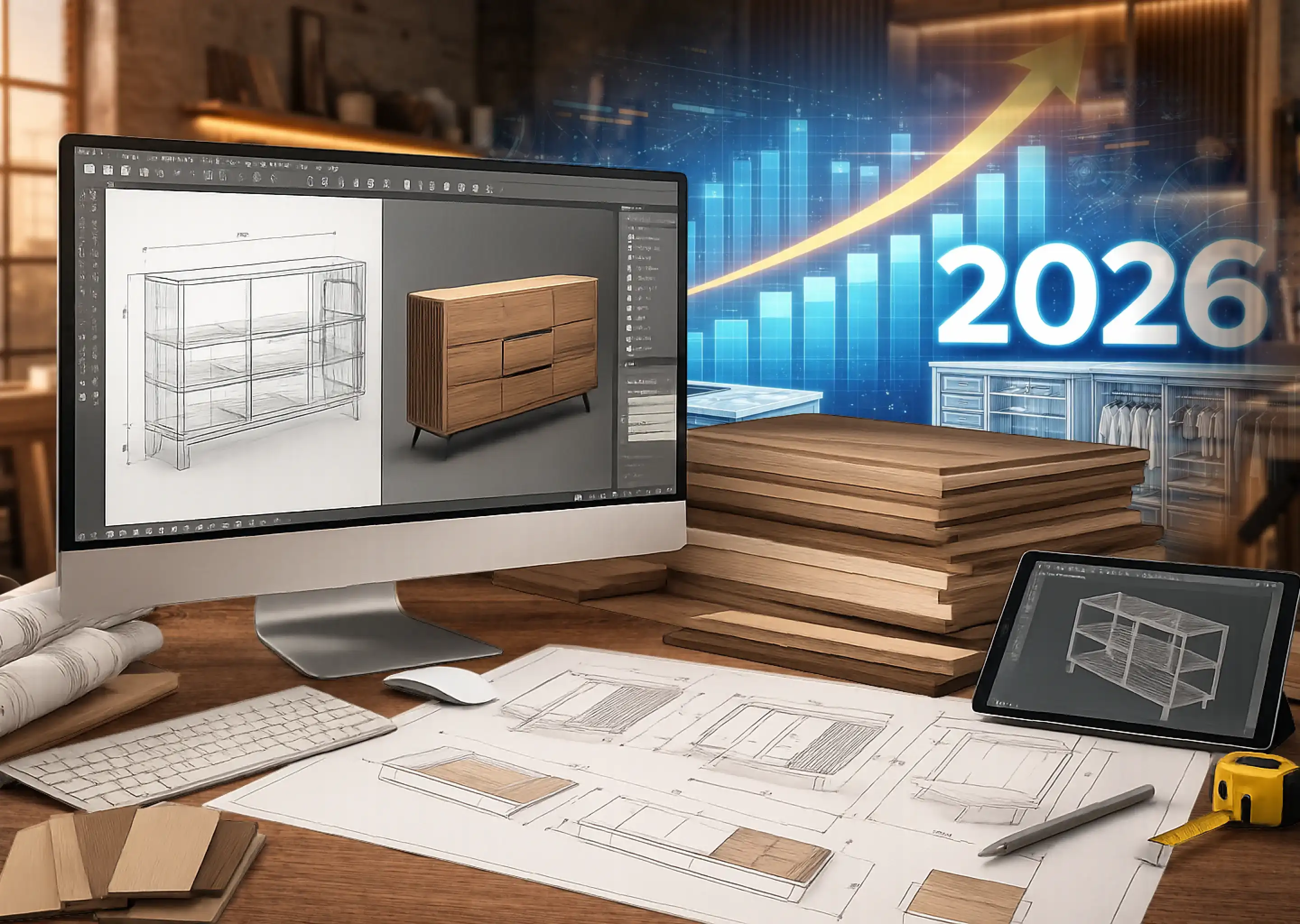
The CAD (Computer-Aided Design) industry is evolving faster than ever before. Businesses looking for cad design services and cad designing services are now prioritizing speed, accuracy, and innovation to stay competitive.
From 3D CAD design services to advanced CAD design and drafting services, modern solutions are transforming how products are designed, tested, and manufactured.
Companies that embrace these innovations are already experiencing up to 60% faster design cycles and significant cost savings, while those lagging behind risk losing their competitive edge.
In this blog, we explore the top 7 CAD design trends in 2026, what’s driving them, and how your business can stay ahead.
The Evolution of CAD: From Drafting to Intelligence
Traditionally, CAD software was used primarily for creating technical drawings and 3D models. While these capabilities still exist, modern CAD tools now incorporate:
- Artificial intelligence for design optimization
- Cloud platforms for real-time collaboration
- Simulation tools for predictive analysis
- Integration with manufacturing systems
This shift marks the transition from manual design processes to intelligent design ecosystems.
As a result, organizations can innovate faster, reduce errors, and bring products to market more efficiently.
1. AI-Powered Generative Design
One of the most transformative CAD trends in 2026 is AI-powered generative design.
Instead of manually creating and testing multiple design options, engineers can now input constraints such as materials, weight, cost, and performance goals. The AI then generates hundreds or even thousands of optimized design alternatives.
Read Also : What is CAD Design and Drafting Services and How It’s Useful?
Many companies offering 3D CAD design services are now integrating AI to deliver faster and more optimized design solutions.
Benefits:
- Rapid design exploration
- Optimized performance and material usage
- Reduced time spent on iterations
This approach allows teams to discover solutions that may not have been possible through traditional design methods.
2. Cloud-Based CAD Collaboration
Cloud computing has revolutionized how teams work together. In 2026, cloud-based CAD platforms are becoming the standard.
Leading providers of cad design drafting services are leveraging cloud platforms to enable real-time collaboration across global teams.
Designers, engineers, and stakeholders can now:
- Access files from anywhere
- Work on the same design in real time
- Share feedback instantly
Why It Matters:
Remote and hybrid work environments demand flexible tools. Cloud CAD eliminates version control issues and ensures everyone is always working on the latest design.
3. Digital Twin Technology
Digital twins are virtual replicas of physical products or systems. In CAD, they allow designers to simulate real-world behavior before manufacturing begins.
Key Advantages:
- Predict product performance
- Identify potential failures early
- Reduce costly physical prototypes
By using digital twins, companies can move from reactive problem-solving to proactive optimization.
Also Read: How much does it cost to hire 3D CAD Designers?
4. Advanced Generative Design Systems
While basic generative design focuses on shape optimization, advanced systems go further by considering:
- Manufacturing constraints
- Material properties
- Environmental conditions
This ensures that designs are not only innovative but also practical and manufacturable.
Example Use Cases:
- Lightweight aerospace components
- Energy-efficient structures
- Complex organic shapes for medical devices
5. AI-Assisted Design Automation
Repetitive tasks are one of the biggest productivity drains in CAD workflows. In 2026, AI is increasingly used to automate:
- Modeling tasks
- Documentation generation
- Quality checks
Impact:
Designers can focus more on creativity and problem-solving while automation handles routine processes.
This leads to:
- Faster project completion
- Reduced human error
- Improved design consistency
Also Read: Benefits of Hiring A CAD Designer or Drafter in the UK?
6. Cloud and AI Integration
The combination of cloud computing and AI is unlocking new possibilities in CAD.
Cloud platforms provide the computational power needed to run complex AI algorithms, while AI enhances the capabilities of cloud-based tools.
What This Means:
- Scalable design solutions
- Access to advanced tools without heavy hardware investment
- Faster processing of large datasets
Even small and mid-sized businesses can now leverage enterprise-level design capabilities.
7. Industry 4.0 and CAD Integration
Industry 4.0 refers to the integration of digital technologies into manufacturing. CAD plays a crucial role in this transformation.
In 2026, CAD systems are increasingly connected to:
- Smart factories
- IoT devices
- Production systems
Benefits:
- Real-time feedback from manufacturing
- Improved production efficiency
- Seamless transition from design to production
This integration ensures that designs are optimized not just for performance but also for manufacturability.
What’s Driving These CAD Trends?
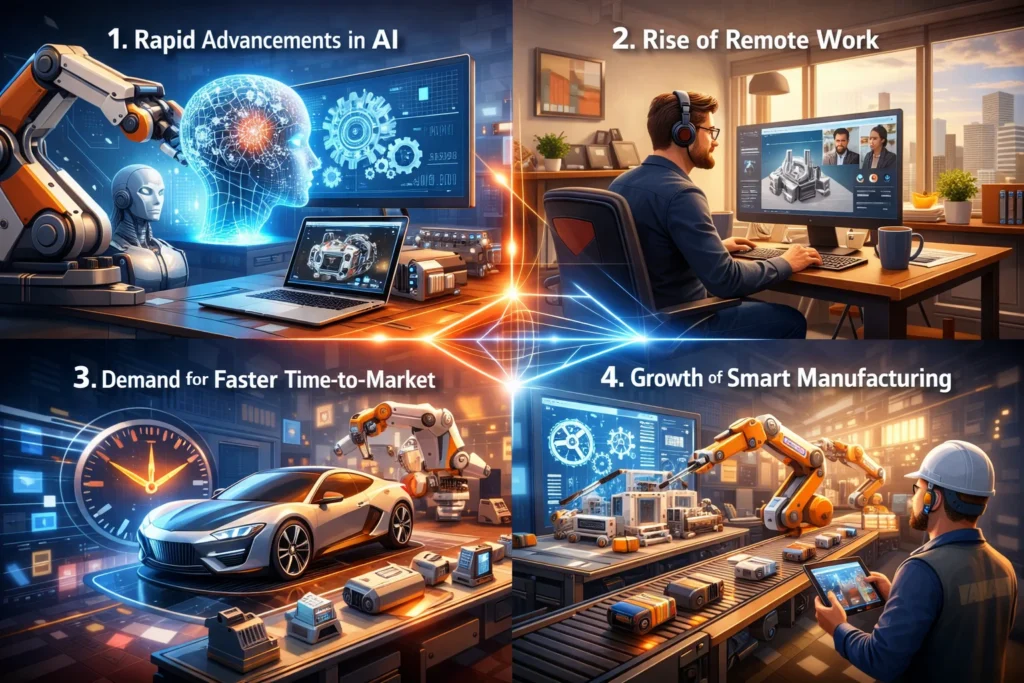
Several key forces are accelerating the adoption of these trends:
1. Rapid Advancements in AI
Artificial intelligence is becoming more powerful and accessible, enabling smarter design tools.
2. Rise of Remote Work
Global teams require flexible, cloud-based solutions for collaboration.
3. Demand for Faster Time-to-Market
Businesses need to innovate quickly to stay competitive.
4. Growth of Smart Manufacturing
Connected systems require seamless integration between design and production.
How to Prepare for the Future of CAD
Adopting new technologies can feel overwhelming, but a strategic approach can make the transition smoother.
1. Start with Cloud Migration
Moving your CAD workflows to the cloud is often the first step. It enables collaboration, scalability, and easier access to advanced tools.
2. Integrate AI Tools
Begin by implementing AI for automation and generative design. Focus on areas where you can achieve quick wins.
3. Invest in Digital Twin Technology
Use digital twins to simulate and test designs before manufacturing.
4. Connect Design and Manufacturing
Ensure your CAD systems are integrated with production processes to streamline workflows.
Common Challenges (and How to Overcome Them)
Resistance to Change
Many teams are hesitant to adopt new technologies.
Solution: Provide training and demonstrate clear ROI.
High Initial Investment
Advanced tools can seem expensive.
Solution: Start small and scale gradually.
Data Security Concerns
Cloud adoption raises security questions.
Solution: Choose trusted platforms with strong security measures.
Choosing the Right CAD Design Services in 2026
With so many advancements in technology, selecting the right partner for your design needs is critical.
Whether you’re a startup or an enterprise, investing in professional cad design services ensures accuracy, efficiency, and scalability.
What to Look For:
- Expertise in 3D CAD design services for complex modeling
- Experience in CAD design drafting services for precise technical drawings
- Ability to provide end-to-end CAD design and drafting services
- Integration with modern tools like AI and cloud platforms
Outsourcing cad designing services can also help reduce costs while giving you access to highly skilled professionals.
The Business Impact of CAD Innovation
Organizations that embrace modern CAD technologies are seeing measurable benefits:
- Faster product development cycles
- Reduced operational costs
- Improved product quality
- Enhanced collaboration across teams
These advantages translate into stronger market positioning and long-term growth.
The Bottom Line
The future of CAD in 2026 is defined by intelligence, connectivity, and speed.
From AI-powered generative design to cloud collaboration and Industry 4.0 integration, these trends are transforming how products are designed and manufactured.
The question is no longer whether to adopt these innovations but how quickly you can implement them.
Final Thoughts
The CAD landscape is entering a new era where innovation is driven by data, automation, and connectivity.
By staying ahead of these trends, your organization can:
- Accelerate design processes
- Reduce costs
- Deliver better products
Now is the time to embrace the future of CAD and unlock new possibilities for growth and innovation. Contact Us and talk about your CAD design needs!