 Sophia S December 22, 2025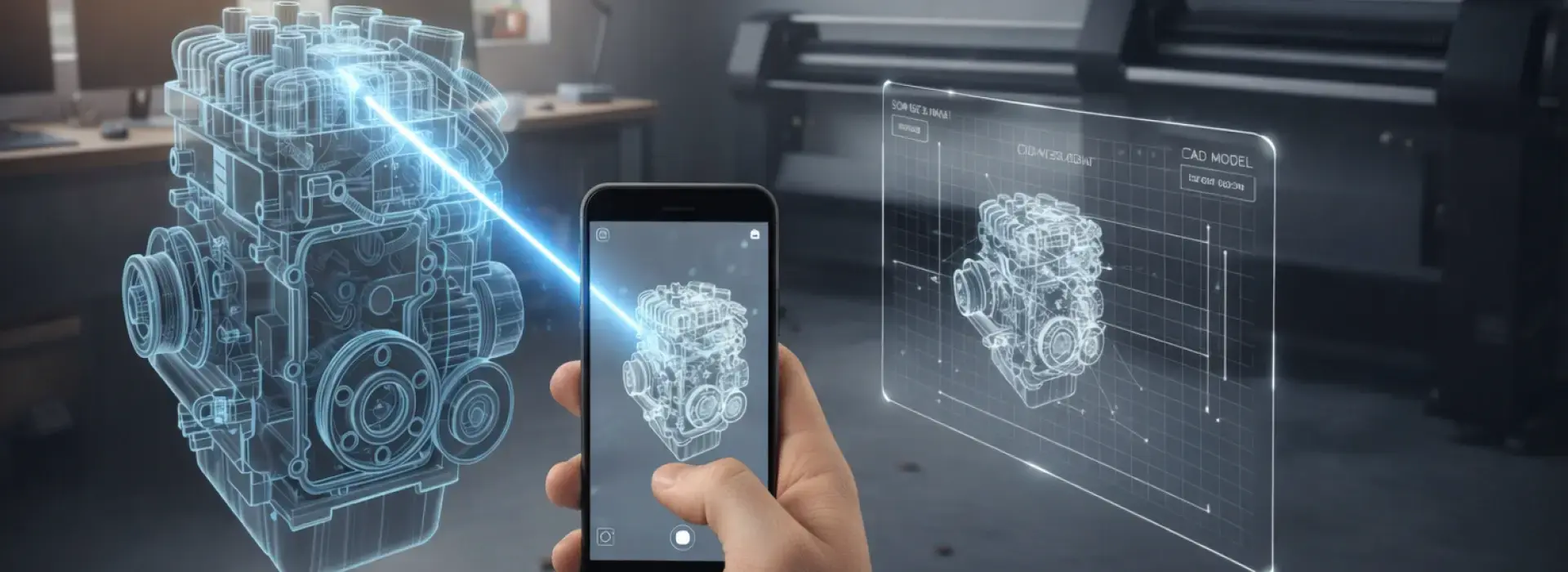
In the AEC (architecture, engineering, and construction) sectors, precision and accurate measurements are key. However, almost every significant industrial upgrade, retrofit, or renovation project nowadays encounters a considerable obstacle. This problem is the widespread use of outdated blueprints, humans prone to manual measurements, or merely insufficient “as-built” documentation that doesn’t accurately reflect reality.
These geometric deficiencies create a costly risk environment for project managers and chief engineers. Honestly, with tight deadlines and zero tolerance for mistakes, why rely on guesswork when you can work with precision?
In this blog, you will know the reasons why Scan to CAD conversion services are in demand and why you should choose these services.
What is Scan to CAD Conversion Really About?
Well, it’s a method where laser scanners capture a physical space and convert it into detailed CAD drawings or 3D models. This method is helpful because it lets you work with what is actually on site, not an imaginary concept without measurements.
What Does the Global Market Say About CAD Conversion?
Recent market studies agree on one thing: the demand for laser scanning and CAD modeling is climbing steadily.
Do you know why? Because the cost of a wrong measurement is far higher than the cost of doing things correctly.
| Source | Market Size 2025 (USD Billion) | Projected Size 2030/2034 (USD Billion) | Compound Annual Growth Rate (CAGR) |
| Mordor Intelligence | $4.09 | $8.23 (by 2030) | 15.01% (2025-2030) |
| Grand View Research | $4.647 | $7,510.5 (by 2030) | 10.1% (2025-2030) |
| Precedence Research | $2.25 | $7.16 (by 2034) | 13.72% (2025-2034) |
This data easily reflects why many teams choose Scan to CAD conversion services. When are you planning to hire a 3D CAD conversion service provider for your project?
Why Businesses are Relying More on CAD Services?
Companies invest because it prevents the headaches that come from bad drawings.
With high-quality CAD conversion services, the team get-
- Dimensions that are precise and confirmed
- Decreased site visits
- Quicker decision-making
- Reduced material waste and rework
- Reliable documentation for compliance
What Really Happens During Scan to CAD Conversions?
1. On-Site Scanning
The Scan to CAD conversion workflow is a structured sequence and begins on-site. Each stage contributes to the final accuracy of the deliverables. Compared to manual measurement, this step frequently takes much less time and prevents disruptions to regular business operations. Sites that are occupied or complicated can still be effectively scanned.
After gathering 2D images, the expert technicians upload the data to sites. This allows them to-
- capture multiple passes to avoid blind spots and misalignments,
- record control points and scale references for precise alignment.
2. Processing and Cleaning
Raw scans are cleaned and aligned in CAD software before feature extraction starts. Proper cleaning removes unwanted distortions, keeping the CAD conversion process running faster and more smoothly later. How this stage helps-
- it removes unnecessary points and fixes gaps in the scanned model,
- it aligns all scans to one coordinate system using control points,
- it reduces data size only if the important details remain intact.
3. Feature Extraction and Modeling
Now comes the part where reality starts to take shape in CAD software.
To create editable geometry, technicians and software extract edges, planes, and curves. This facilitates accurate documentation and the conversion of architectural scans to CAD for architects. Here are the following things that are covered in the stage-
- Auto-extract planes and edges where possible.
- Use manual tracing for complex curves and bespoke details.
- Build solids from cross-sections or primitive fits for 3D CAD models.
4. Final Output and Delivery
Deliver accurate DWG or DXF files ready for design, analysis, or fabrication. Files are quality-checked to support Scan to CAD services for architects and engineers. This final stage covers-
- running dimensional checks against original scans,
- providing layered DWG files with revision notes,
- offering BIM-ready exports when required.
Read More: How do Architectural Companies Create 3D Floor Plans?
What Do You Actually Get From Scan to CAD?
Clients usually receive precise, usable drawings such as:
- 2D floor plans, elevations, and sections
- 3D BIM models for coordination
- MEP layouts
- Structural detailing
- Site plans and facility maps
These outputs support Scan to CAD solutions for construction and renovation projects, where accuracy determines whether the project runs smoothly. It helps construction and renovation projects where accuracy can make or break the entire timeline.
Which Industries Depend on Scan to CAD Conversion Services for Successful Projects?
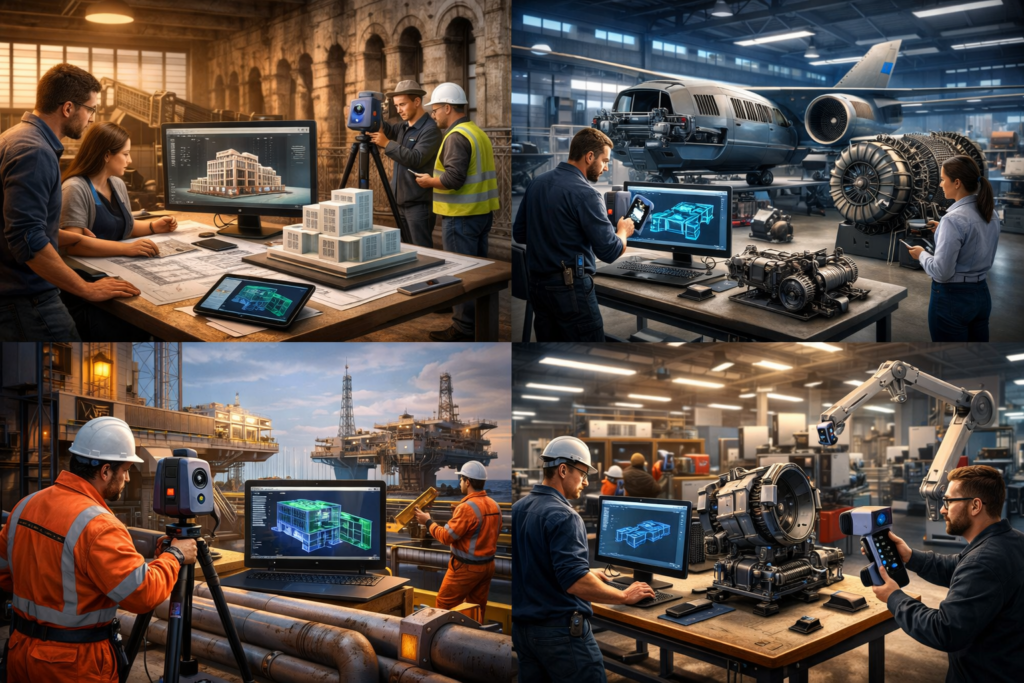
Amid rising demand for these services, several industries have begun consulting expert CAD conversion service providers to ensure precise results and scalability. Here are some of the sectors that demand these CAD conversion solutions for clear documentations-
- Commercial renovations
- Residential extensions
- Industrial plants
- Heritage and conservation projects
- Hospitals and educational facilities
- Retail fit-outs
Teams starting from scratch with new ideas or stuck with outdated paper drawings depend on 3D CAD conversion services to ensure accuracy right away. For engineering and construction teams looking for accuracy, it is now a crucial choice.
Read More: The Future of CAD: Why 2D to 3D CAD Conversion Is Gaining Global Momentum
What are the Common Challenges Faced (and how Professionals Handle them)?
1. Large File Sizes
Point cloud files contain a large amount of data, making in-house teams at large industrial companies tough to manage. To make this easier, several industrial leaders hire dedicated, experienced teams who manage this using high-performance tools that optimize data without significant loss. This ensures reliable outputs for 2D drawings or 3D CAD conversion services.
2. Several Inconsistencies
Basic scans often include numerous unwanted elements, such as reflections, shadows, or moving objects. The skilled technicians clean and refine point clouds to get the actual structure image. This step is one of the most significant as the clean data is essential for an accurate architectural scan to CAD conversion solution and getting the detailed documentation.
Stop Letting Inaccurate Scan Files Ruin Your CAD Drawings
Upgrade to professional Scan-to-CAD conversion services that deliver precise, editable CAD drawings from PDFs, point clouds, and paper plans. Get a free sample conversion today.
3. Complex Geometric Designs without Proper Modeling
Buildings with curved facades, intricate detailing, or irregular shapes demand experienced modelers who know how to work around those complexities. Professional teams interpret the data correctly and convert it into clean architectural and structural drawings. Their skill ensures geometric accuracy that basic software alone cannot achieve.
4. Various Alignment Issues
Scans from various angles must be stitched together precisely. Misalignment are common in raw data, but registration techniques can fix them. Professionals realign, merge, and validate each scan, allowing the final dataset to support accurate planning for architects, engineers, and contractors.
When Should You Hire a Scan to CAD Conversion Service Provider?
- When a component needs to be reverse-engineered without any drawings.
- To create an accurate digital 3D inventory of physical parts.
- When working with free-form shapes that are difficult to measure by hand.
- To digitise and conserve heritage assets or machinery.
- For creating “as-built” models of current facilities that are incredibly accurate.
- If a manufactured product needs to be compared to the original design specifications.
Let’s Wrap Up
Scan to CAD conversion is the bridge between reality and precision. For architects, engineers, and construction teams, relying on outdated drawings or manual measurements is like taking a significant risk. So, investing in professional Scan to CAD conversion services that ensure every dimension, every detail, and every plan reflects reality is an ideal decision.
Shalin Designs, a leader in CAD design solutions, offers expert Scan to CAD services for architects and engineers, as well as to a wide range of industries. Connect with our experts and get the best consultations.